Liquid Gasoline Hydrocarbons vs. Mercaptan Odor
Homeowners entering an attached garage frequently detect a strong chemical fuel smell and wonder whether their car is leaking or if the gas furnace line has ruptured. Understanding the chemical differences will help you respond properly:
- Natural Gas Odor (Mercaptan): Pure natural gas (methane) is completely odorless. By federal and state law, utilities inject an odorant blend containing tert-Butyl mercaptan and dimethyl sulfide. It produces an unmistakable, pungent stench identical to rotting cabbage, rotten eggs, or skunk spray. It does not smell like sweet petroleum.
- Automotive Fuel Odor (Gasoline / Hydrocarbons): Gasoline is a complex liquid mixture of liquid hydrocarbons, including benzene, toluene, and octane. It has a distinctive sweet, sharp, solvent-like petroleum smell (like an outdoor fueling station).
Common Vehicle Fuel Leak Sources in Attached Garages
In modern vehicles parked in enclosed Ashburn garages, gasoline odors usually stem from:
- EVAP Purge Valve or Canister Saturation: The Evaporative Emission Control (EVAP) system traps fuel vapors from the fuel tank inside an activated charcoal canister. If the purge solenoid fails or the gas cap seal is cracked, vapors vent directly into the garage air.
- Fuel Rail & Injector O-Ring Shrinkage: During winter temperature plunges, rubber fuel injector O-rings shrink, allowing liquid gasoline under 45–60 PSI rail pressure to seep onto the hot engine intake manifold.
- Lawnmower & Power Equipment Carburetors: Unvented portable plastic gas cans or lawnmower float bowls weeping fuel onto garage concrete floors.
The Extreme Hazard of Attached Garages
Many Ashburn homes feature gas water heaters and high-efficiency furnaces installed directly on the garage floor or on a raised stand. Gasoline vapors are more than three times heavier than air (vapor density 3.0 to 4.0), causing them to pool along the garage floor.
If pooled gasoline vapors reach the open burner chamber or pilot ignition assembly of a gas water heater, a massive flash fire can erupt. If you smell gasoline in a garage containing gas appliances, open the exterior overhead garage door immediately to dissipate fumes, and do NOT turn on the car engine or water heater.
Diagnostic Checklist: Car vs. Gas Line
Quick Diagnostic Test:
1. Move the vehicle out into the driveway and leave the garage door open for 30 minutes to ventilate.
2. Close the garage door and return 20 minutes later.
3. If the odor is gone: The source is the vehicle or stored power equipment. Call an automotive mechanic.
4. If the rotten egg odor returns: The source is a natural gas piping fitting, water heater valve, or furnace line. Call Ashburn Gas Response immediately.
Who to Call: Auto Mechanic vs. Master Plumber
If your odor test confirms a sulfur rotten egg smell, or if your digital combustible gas detector sounds, do not hesitate. Contact Ashburn Gas Response at (703) 312-2655 for emergency sniffer isolation. If the odor is distinctly sweet petroleum from the car, schedule service with your certified mechanic.
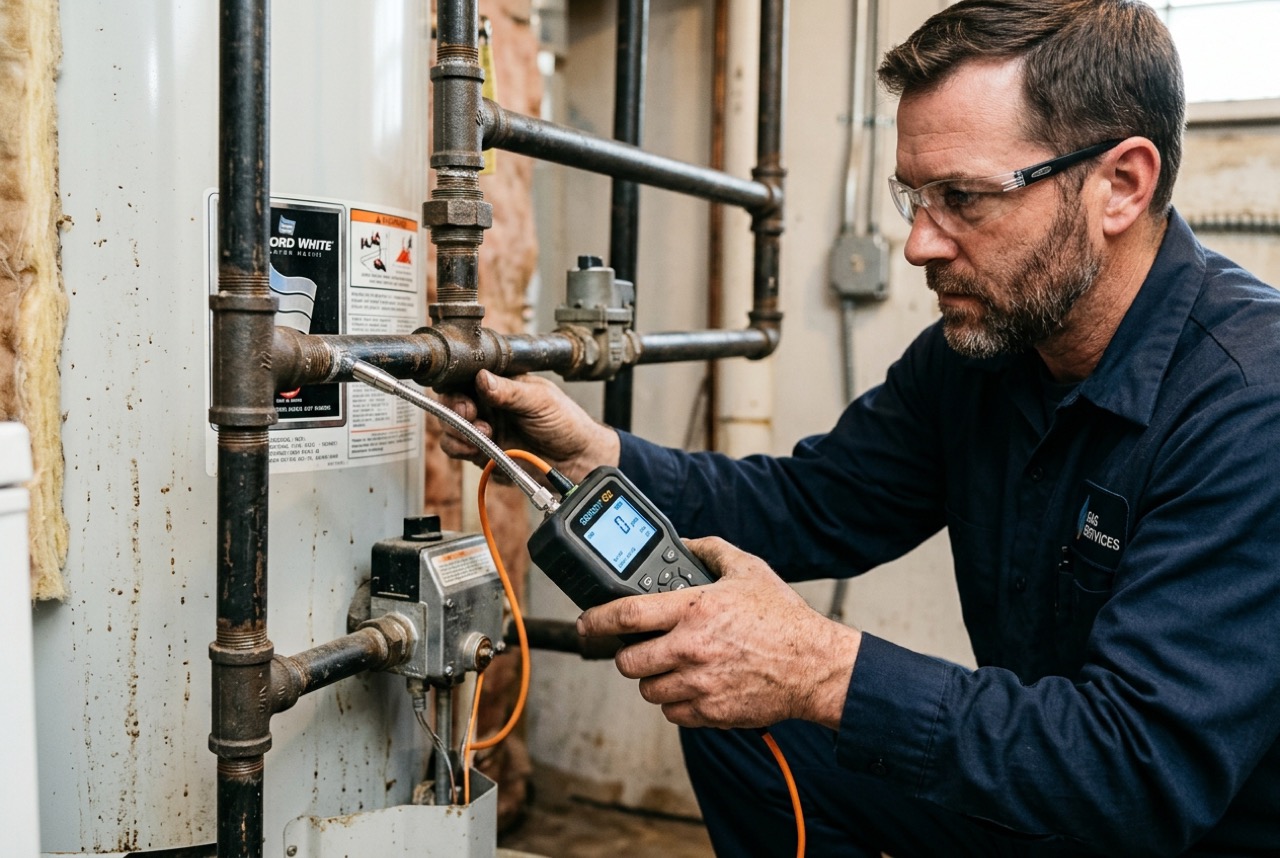
Still Unsure What You Are Smelling? Never gamble with combustible vapors. Call (703) 312-2655. Our technicians carry digital multi-gas sniffers that instantly differentiate volatile organic hydrocarbons from methane.